
How to Book Your Band’s First Interstate Tour in Australia
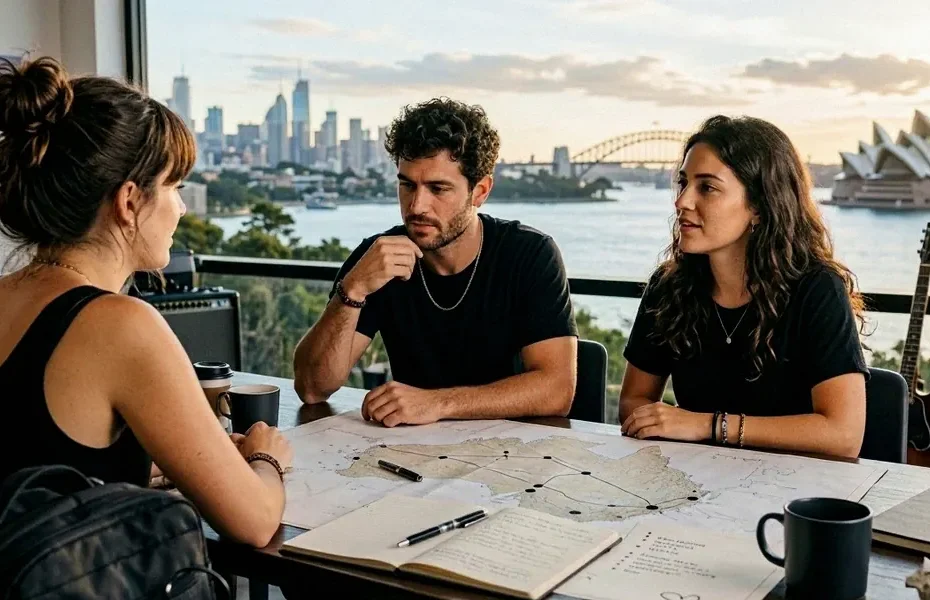
We still remember the night we sat around a wobbly table in a share house, staring at a map of Australia and a bank balance that made us laugh out loud. Our singer had just scored us a support slot in Sydney, and we were buzzing — until our drummer pointed out that our trusty van had 380,000 kilometres on the clock and a radiator that hissed like a snake every time we pushed it past 90. The Hume Highway suddenly looked less like a rock ‘n’ roll adventure and more like a death sentence for a 1998 Toyota HiAce. That’s the thing about your first interstate tour: it’s equal parts dream and logistics nightmare. But if you’ve ever stood in the crowd at a packed punk show in Melbourne or Sydney and thought, “that could be us,” then this guide is for you. Here’s everything we learned the hard way so you don’t have to.
Why Tour Interstate? (And Why It’s Worth the Hassle)
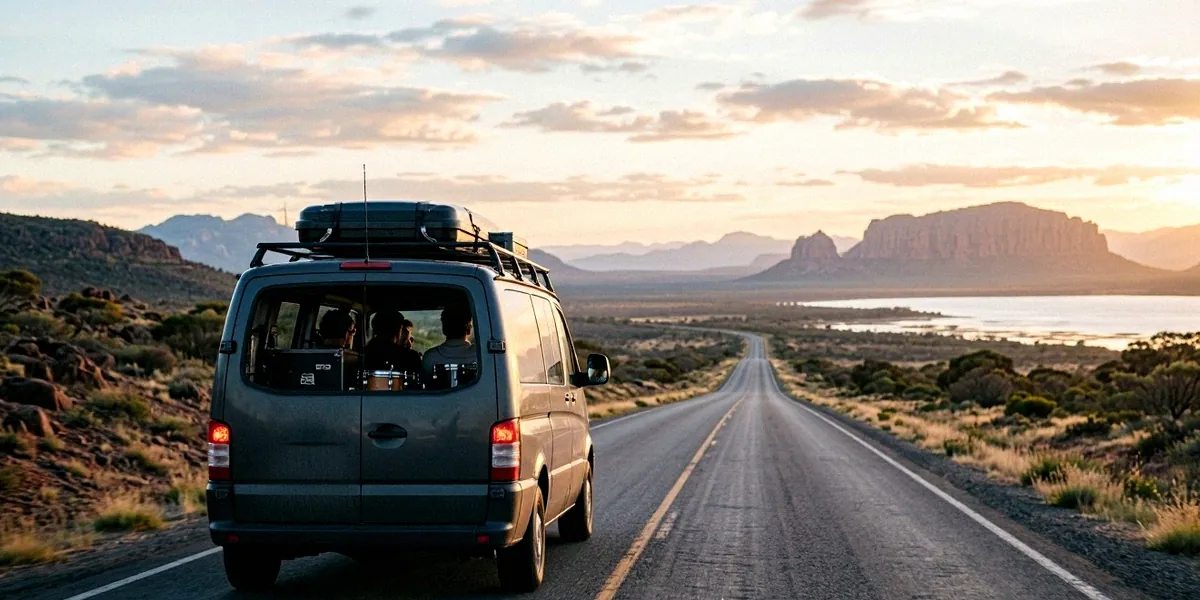
Touring beyond your postcode is the single biggest step a punk band can take. It’s sweaty, expensive, and occasionally demoralising — but it’s also how you turn a local hobby into a national project. If you’re serious about punk rock Australia, the highway is your classroom.
Building a National Following
Playing the same three venues in your hometown every month means you’re cycling through the same 40 people. Hit the road and suddenly you’re in front of new crowds in Melbourne, Sydney, Brisbane, and Adelaide who’ve never heard your band but might buy your record. Every gig is a chance to convert strangers into fans who’ll stream your pop punk albums and buy a tee at the merch table. Those fans talk to other fans, and that’s how a national following actually gets built — one sticky carpet at a time.
Escaping the Local Bubble
There’s a particular trap we call the local bubble. You know everyone, everyone knows you, and your sound starts to calcify because nobody’s pushing you. Touring breaks that. Playing to a Sydney crowd that doesn’t care about your hometown reputation forces you to actually win them over. It sharpens your live show and reminds you why you started playing in the first place.
Planning Your Route and Budget
The difference between a fun tour and a financial disaster usually comes down to planning. You don’t need a tour manager — you need a spreadsheet and a realistic sense of what fuel costs.
Choosing Cities and Venues
The classic east coast loop runs Melbourne → Sydney → Brisbane, with Adelaide tacked on if you’ve got the time and the fuel money. Each city has its own scene and its own quirks. Melbourne is dense and walkable; Sydney is sprawling and expensive; Brisbane is hot and hungry for new bands. Don’t try to hit every town on your first run — pick four or five cities, give yourself a rest day, and don’t book a show in a city you’re only passing through for two hours.
Budgeting for Fuel, Food, and Accommodation
This is where most first-timers get burned. Fuel is your biggest cost, especially if you’re towing a trailer. Download the FuelCheck app before you leave — it shows real-time fuel prices across NSW and saves you real money on long stretches like the Hume Highway. Budget roughly:
- Fuel: $400–$800 depending on your route and vehicle
- Accommodation: free if you’re crashing with bands or friends, otherwise $30–$60 per person per night in hostels
- Food: $20–$30 per person per day if you’re cooking at servos and avoiding pub meals
- Merch stock: $200–$500 upfront for shirts and records
- Contingency: always keep $300 aside for a breakdown or a blown tyre
Booking Gigs: Who to Contact and How
Booking is the part that scares most bands. It shouldn’t. Bookers are people, and most of them are in bands themselves. Be polite, be specific, and be patient.
Researching Venues and Promoters
Start with the venues you already know by reputation. In Melbourne, The Tote in Collingwood is basically a rite of passage — if you can get a slot there, take it. In Sydney, The Lansdowne Hotel on City Road is another essential stop for any touring punk band. Beyond those, look at smaller DIY spaces, band rooms, and community halls. Follow local promoters on Instagram, and check who’s putting on the shows you’d want to play.
Crafting Your Pitch
Keep your email short. Bookers get dozens a week. Include your band name, genre, a link to your best live video, your available dates, and a one-line description of your draw. Don’t attach huge files. Don’t write a novel. Something like: “Hey, we’re [band], a pop punk band from [city]. We’re touring through [city] on [dates] and would love to jump on a bill. Here’s a live clip and our EP. Happy to send more.” That’s it.
Following Up Without Being Annoying
Wait a week, then send one polite follow-up. If they don’t reply after that, move on and try again next tour. Pestering bookers is the fastest way to get blacklisted in a scene as tight as Australia’s.
Promoting Your Tour Like a Pro
You can’t just show up and expect a crowd. Promotion is half the work, and it starts weeks before you leave.
Social Media and Event Pages
Create a Facebook event for every show and share it relentlessly — but vary your content. Behind-the-scenes clips, van-packing chaos, and snippets of new songs perform way better than a static poster. Instagram Reels and TikTok are where younger punk audiences actually live, so use them. Tag the venue, tag the other bands, and ask everyone to share.
Local Radio and Zines
Community radio is a gift. Melbourne’s 3RRR has long championed local and touring punk, and a quick email to the right show can get you an interview or a spin. Zines — including the one you’re reading right now — are always looking for tour diaries and band interviews. Send them something honest and you’ll get free coverage that money can’t buy.
Merch and Physical Promotion
Print posters and put them up in record stores, op shops, and venue noticeboards. Bring a decent merch table setup — a tablecloth, a card reader, and clearly priced items. Physical merch still sells at punk shows, and it’s often what keeps your fuel tank full.
On the Road: Practical Tips for Survival
The tour itself is where the memories get made — and where things go wrong. Prepare for both.
Packing and Gear Essentials
Pack light but pack smart. Spare strings, gaff tape, a soldering iron, a power board, and a basic toolkit are non-negotiable. Bring more socks than you think you need. Label your gear. And always, always have a spare van key hidden somewhere on the vehicle.
Staying Sane and Healthy
Long drives on the Hume Highway and endless roadhouse pies will wreck you if you’re not careful. Drink water, sleep when you can, and rotate drivers. Australian roadhouses are a cultural institution, but you don’t need a deep-fried dim sim at every stop. A good playlist keeps morale up — make one that everyone contributes to, and make sure it’s got at least one song that makes the whole van scream along.
Documenting the Journey
Film everything. Take photos at every venue, every servo, every dodgy motel. You’ll use this content for months afterward, and it’s the raw material for your next tour’s promo. Plus, in ten years, you’ll be glad you have it.
After the Tour: Keeping the Momentum
The tour ends, but the work doesn’t. What you do in the two weeks after you get home determines whether this was a one-off or the start of something real.
Thank Yous and Follow-Ups
Email every booker, every band you played with, and every person who put you up. Thank them specifically. Share their posts. Buy their merch. This is how you build a network in the Australian punk scene that will pay off for years.
Planning the Next Adventure
Strike while the iron’s hot. Book a return tour within six months, hit the cities that treated you well, and add one or two new ones. Momentum is everything.
FAQ
How much does a first interstate tour usually cost?
For a four-piece band doing a five-city east coast run, expect to spend somewhere between $2,000 and $4,000 all up. Fuel, accommodation, and food are the big three, but don’t forget merch stock and a contingency fund for breakdowns.
Do we need a booking agent to get into venues like The Tote or The Lansdowne?
No. Both venues regularly book unsigned and touring bands directly. A clear, polite email with a live video and your available dates is usually enough to get a foot in the door.
What’s the best app for finding cheap fuel on the road?
FuelCheck is the go-to for real-time fuel prices across NSW, and it’s saved us serious money on long Hume Highway stretches. Pair it with a loyalty card and you’ll shave even more off your fuel bill.
How far in advance should we start booking?
Aim for two to three months minimum. Iconic venues fill their calendars fast, and you want time to promote properly. Three months gives you breathing room without dragging the planning out forever.
Is it worth sending our music to community radio like 3RRR?
Absolutely. 3RRR and similar stations actively support Australian punk and pop punk. A short, friendly email with a streaming link can land you an interview or a playlist spot that reaches thousands of listeners.
Your first interstate tour will probably be chaotic, underfunded, and full of moments you’ll laugh about later. It’ll also be one of the most formative things your band ever does. The Hume Highway will test your van, your patience, and your friendships — but it’ll also connect you to a national punk community that’s bigger, weirder, and more welcoming than you ever imagined. Pack the van, print the posters, and go. The scene is waiting.