
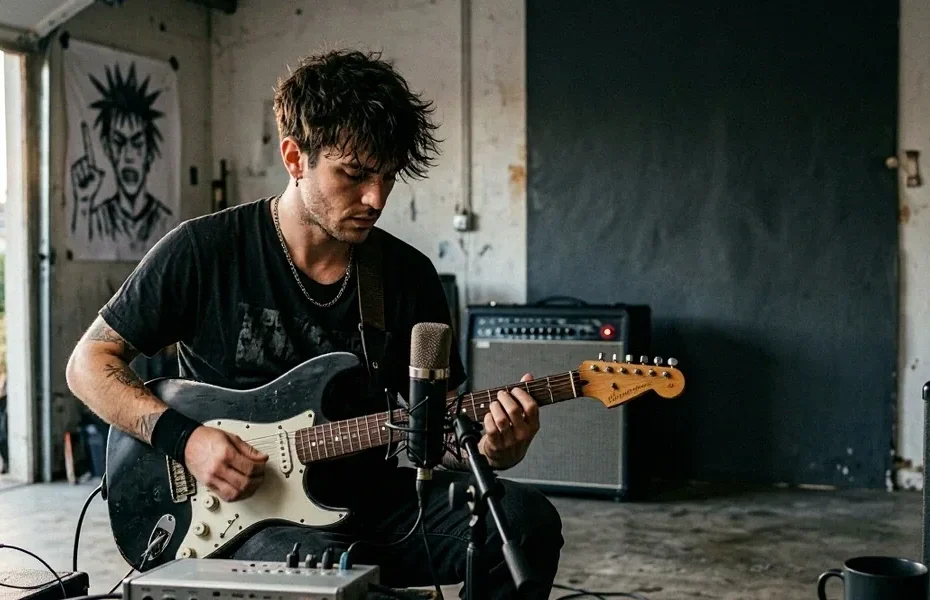
From Garage to Gig: Recording a Punk Demo at Home
Your band has spent months in a sweaty rehearsal room and finally nailed a killer set. You’re ready to hit the stage at The Tote or Crowbar, but there’s one problem: the booker wants to hear something first. We’ve been there. The good news is you don’t need a fancy studio or a record deal to make a demo that captures your band’s raw energy. All you need is a laptop, a cheap interface, a mic or two, and the willingness to embrace imperfection. This guide walks you through recording, mixing and promoting a punk demo from your bedroom or garage, with practical tips for the Australian scene.
Why Your Band Needs a Demo (Even in the Streaming Age)
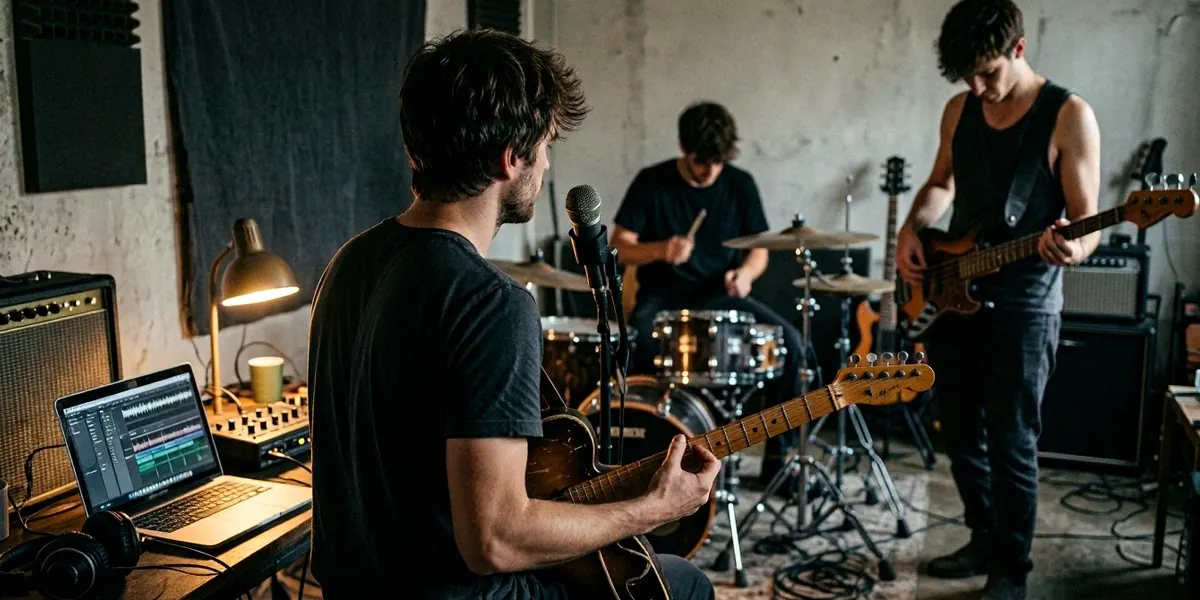
We hear it all the time: “Isn’t a demo dead? Can’t I just send a video?” The answer is no. A demo is still the currency of the Australian punk scene. Venues want to hear your songs before they hand you a support slot, and radio programmers need a clean, shareable file they can play on air. A demo also forces you to tighten your arrangements — you’ll hear the dead weight in a song once it’s recorded. Think of it as a rehearsal that you can send to strangers.
The Booking Agent’s Perspective
When we talk to bookers around the country, they tell us the same thing: they don’t have time to scroll through a grainy phone video. They want a link to two or three tracks that sound like your band, ideally with a clear genre tag and a contact email. A tight three-song demo tells them you’re organised, serious and ready to play. It also protects them — if your demo sounds good, they know the gig will sound good.
Using Your Demo to Get on Local Lineups
Once your demo is done, don’t just sit on it. Send it to promoters who book the venues you want to play. Attach a short bio, a photo and a link to your socials. Follow up politely after a week. We’ve seen bands land support slots simply because they had a solid demo and were easy to deal with. The demo is the foot in the door; the rest is hustle.
Essential Gear for Capturing Punk Energy at Home
You don’t need a Neve console to record punk rock in Australia. We’ve recorded demos on a borrowed Focusrite Scarlett 2i2 and a single Shure SM58, and it sounded more alive than plenty of glossy studio recordings. The key is capturing the energy of the performance, not the perfection of the signal chain. Here’s the basic kit we recommend starting with.
Microphones and Interfaces on a Budget
- USB audio interface: A Focusrite Scarlett Solo or 2i2 is the workhorse of home recording. It’s cheap, reliable and sounds clean.
- Dynamic microphone: The Shure SM58 is virtually indestructible and handles loud punk vocals without distortion. A second SM57 is great for guitars and snare.
- Free DAW: Reaper is free to evaluate and costs very little to license. GarageBand comes free on Mac. Both are more than enough for a punk demo.
- Cables and stands: Budget for decent XLR cables and a couple of mic stands. Don’t skimp on the basics.
DIY Recording Hacks for Guitars and Drums
For guitars, point an SM57 at the speaker cone, slightly off-centre, and crank the amp. If you’re recording in a small room, hang blankets or mattresses behind the amp to tame reflections. For drums, you can get away with two mics — one overhead and one on the kick — or even a single room mic if the kit is balanced. Don’t worry about close-miking every tom. Raw and roomy is punk.
Recording Techniques for a Raw, Live Sound
The best punk demos sound like the band playing together in a room, because that’s exactly what they are. Australian bands like Amyl and the Sniffers and The Chats built their reputations on unpolished, high-energy recordings. Their early demos weren’t pristine — they were loud, honest and immediate. We think that’s the target you should aim for.
Tracking Live vs. Layering
If your band can play tight together, record live off the floor with everyone in the same room. Use headphones and isolate amps where possible. The bleed between instruments actually adds to the live feel. If your drummer struggles with timing or your room is too noisy, layer the tracks: record drums first to a click, then bass, then guitars, then vocals. Both approaches work — just don’t spend weeks chasing a sound that isn’t yours.
Capturing Vocals with Attitude
Sing like you’re playing to a packed room at The Tote, not like you’re trying not to wake your neighbours. Get close to the mic, use a pop filter or a sock, and do multiple takes. Pick the take with the most energy, not the most accurate pitch. A slightly sharp or flat note with conviction beats a pitch-perfect performance with no guts every time.
Mixing and Mastering Your Demo (Without Losing the Punk Edge)
Mixing punk is about balance and impact, not surgical precision. We start by setting the drums and bass so they lock together, then bring in guitars and vocals. Use compression gently to control peaks and keep the energy consistent. Avoid over-polishing — if you quantise every drum hit and tune every vocal, you’ll sand off the personality that makes your band worth listening to.
Balancing Raw and Refined
Free plugins like TDR Nova give you a powerful EQ without spending a cent. Use it to cut muddiness in the low mids and add presence to vocals. A little saturation on the drum bus can glue the kit together. Keep your master simple: a gentle limiter to bring the level up to streaming standards, and that’s it. Don’t stack ten plugins on the master bus — that’s how demos start sounding like toothpaste commercials.
Preparing Your Track for Spotify and Bandcamp
Streaming platforms normalise loudness, so aim for around -14 LUFS integrated and leave a little headroom. Export your mix as a 24-bit WAV at 44.1kHz for Bandcamp, and a high-quality MP3 or AAC for socials. Always keep a clean, unmastered version in case a label or radio station asks for it. Trust us, they will.
Distributing and Promoting Your Demo in Australia
Recording the demo is only half the battle. Now you need people to hear it. The first stop for any Australian punk band should be Triple J Unearthed. It’s free, it’s designed for unsigned artists, and getting featured there can lead to real radio play. Beyond that, share your tracks on social media, send them to community radio, and print a small run of physical copies for merch tables at gigs.
Getting Airplay on Community Radio
Community stations like 3RRR in Melbourne and 2SER in Sydney are huge supporters of local punk. Find the presenter of the punk or local music show and email them a short, polite pitch with a link to your demo. Don’t spam every show at once — build relationships. A single spin on a community station can lead to a gig offer or a review in a zine.
Using Your Demo to Book Melbourne Gigs and Sydney Live Music
With a demo in hand, you can approach venues directly. Send a concise email to The Tote in Melbourne or Crowbar in Sydney with your demo link, a short bio and the dates you’re available. Mention any support slots you’ve played and your draw. Be persistent but respectful. We’ve found that a well-timed follow-up email often makes the difference between a “maybe” and a confirmed gig.
FAQ
Do I really need a demo to get gigs in Australia?
In most cases, yes. Venues and promoters receive far more requests than they can accommodate, so they use demos to filter for bands that are organised and sound good. A demo doesn’t need to be studio-quality — it just needs to represent your band honestly.
What’s the cheapest way to record a punk demo at home?
A USB interface like the Focusrite Scarlett Solo, a Shure SM58 and free software like Reaper or GarageBand will get you a long way. Borrow gear from friends if you can, and focus on capturing a great performance rather than buying expensive equipment.
Should I record live or layer tracks?
If your band plays tight together, recording live off the floor captures the energy and chemistry that makes punk special. If timing or room noise is an issue, layering tracks one at a time gives you more control. Both approaches are valid — choose what suits your band.
How do I get my demo on Triple J Unearthed?
Create a free artist profile on the Triple J Unearthed website, upload your tracks and add a bio and photo. Make sure your tracks are properly tagged and that your contact details are up to date. Getting featured is never guaranteed, but uploading is free and essential.
How polished should my demo sound?
Polished enough to hear every part clearly, but raw enough to keep your band’s personality. Avoid heavy tuning, quantising and over-compression. The goal is to sound like your band playing in a room, not like a pop production.
At the end of the day, the most important thing is to finish your demo and get it out there. A rough demo that exists beats a perfect one that never leaves your hard drive. Perfect is the enemy of punk — so stop tweaking, hit export, and start booking those gigs.