
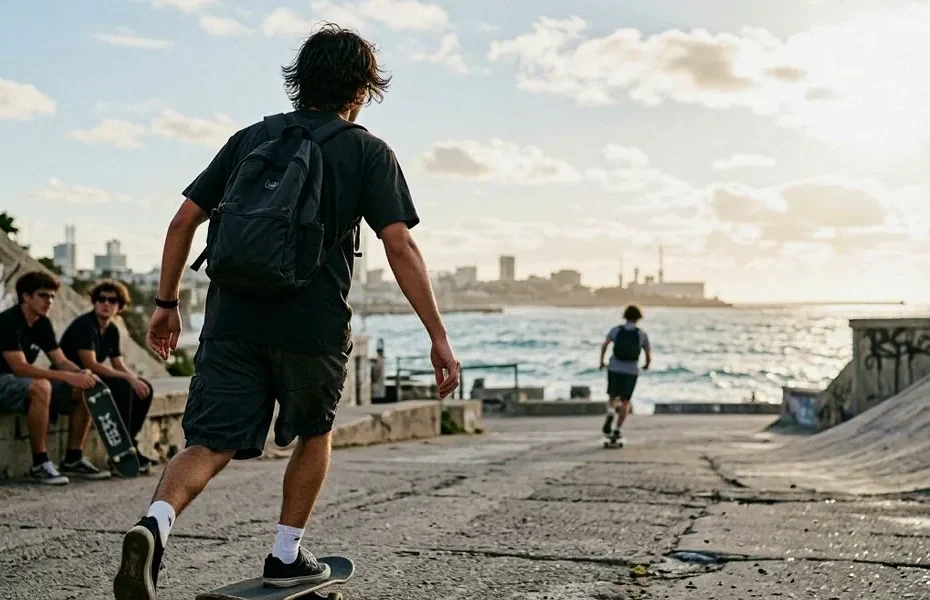
Skate Punk Explained: The Sound, The Bands, The Culture
We still remember the first time a skate video properly rewired our brains. Someone had dubbed a worn VHS copy of a Santa Cruz tape, and halfway through a bowl session, a song kicked in at double speed — galloping drums, a palm-muted riff that sounded like a chainsaw, and a chorus you could shout along to before you’d even learned the words. That was our introduction to skate punk, and it’s the same doorway thousands of Australian kids have walked through since, whether via a Tony Hawk’s Pro Skater soundtrack, a mate’s mixtape, or a sweaty all-ages show at a local hall. Skate punk isn’t just a genre tag — it’s a sound, a community and a way of doing things that still runs deep through Australia’s punk scene.
What Is Skate Punk? The Sound That Fuels the Bowl
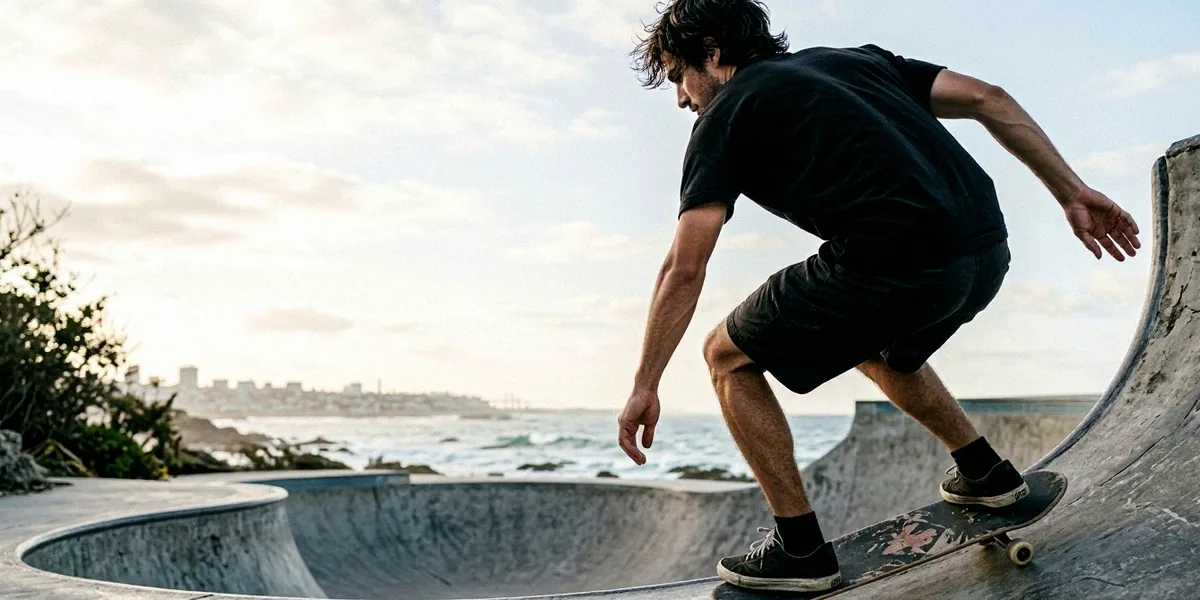
Skate punk is a fast, melodic offshoot of hardcore punk that grew out of 1980s California, where surfers, skaters and hardcore kids collided. Bands started writing shorter, sharper songs with more melody than straight hardcore but far more speed than the pop punk that would later dominate the charts. The result was a sound built for skate videos and backyard ramps: urgent, hooky and physically exhausting to play.
Key sonic traits are easy to spot once you know what you’re listening for: rapid-fire drumming, palm-muted guitar riffs that chug along at breakneck tempo, and anthemic choruses designed to be yelled by a crowd with fists in the air. The rhythm section does the heavy lifting, while the guitars stay tight and rhythmic rather than flashy.
Fast Tempos and Melodic Riffs: The Core Ingredients
If you want to understand skate punk in one sitting, listen for the tension between speed and melody. The drums push the tempo past what most rock bands would attempt, the bass locks in with the kick drum to keep things driving, and the guitar riffs are short, repetitive and memorable. Vocals sit somewhere between a shout and a sing — aggressive but never tuneless. It’s a formula that rewards precision: sloppy playing falls apart instantly at these tempos, which is why skate punk bands tend to be tight live acts.
How Skate Punk Differs from Pop Punk and Hardcore
People often lump skate punk, pop punk and hardcore together, but the distinctions matter. Hardcore is rawer, heavier and often slower to mid-tempo, with shouted vocals and less emphasis on melody. Pop punk smooths out the edges — cleaner production, bigger choruses, more radio-friendly arrangements. Skate punk sits between the two: it keeps hardcore’s speed and DIY attitude but borrows pop punk’s knack for a hook. That middle ground is exactly why it translates so well to skate videos and live shows.
The Bands That Defined Skate Punk
Tracing the genre’s evolution is basically tracing a lineage of Californian bands who took hardcore’s intensity and made it melodic. That lineage eventually crossed the Pacific and took root in Australia, where local bands have been carrying the torch ever since.
1980s Pioneers: Suicidal Tendencies, JFA, and Beyond
Suicidal Tendencies and JFA were among the earliest bands to fuse hardcore speed with skate culture, playing shows where the pit and the skate session blurred into one. Their influence set the template: fast riffs, aggressive delivery and a strong visual identity tied to skateboarding. These bands proved that punk could be both physically intense and genuinely fun.
1990s Explosion: Pennywise, NOFX, and Epitaph Records
The 1990s is when skate punk went global. Pennywise, NOFX and Lagwagon became the genre’s flagship acts, and Epitaph Records built a roster that defined the era. NOFX’s Punk in Drublic is a landmark pop punk album often cited by skate punks as a gateway record — it’s fast, funny, melodic and endlessly quotable. That album, along with the Epitaph catalogue, shaped how a whole generation understood punk’s possibilities.
Australian Torchbearers: The Decline and Local Heroes
Australia didn’t just import skate punk — it built its own version. Perth’s The Decline carries the skate punk torch with fast, melodic tunes and a relentless touring ethic, and they’ve become one of the country’s most respected punk exports. Alongside them, a network of local bands across every state keeps the sound alive in pubs, bowls and community halls.
Skate Punk Culture: More Than Just Music
Skate punk has always been bigger than the songs. It’s a DIY culture built on zines, skate videos, independent labels and the understanding that you don’t wait for permission to make something happen. That ethos is exactly what makes the Australian scene tick.
DIY or Die: Zines, Skate Videos, and Independent Labels
Zines were the original social media for skate punks — photocopied, stapled and traded at shows. Skate videos did the same job visually, pairing tricks with soundtracks that introduced viewers to new bands. Independent labels kept records coming out without major-label interference. That same DIY spirit drives us at uselessid.net: covering gigs, records and scene news because we care about it, not because a corporation asked us to.
Skate Parks and Gig Venues: Where Culture Meets Concrete
Skate parks and punk venues are the two halves of the same world. In Australia, local skate parks act as informal meeting points where kids discover bands, while venues like The Tote in Melbourne — a legendary spot for punk and skate punk gigs — provide the stage. The Lansdowne Hotel in Sydney hosts regular live music, including punk shows, keeping the city’s scene connected. Between the concrete and the stage, the culture keeps regenerating itself.
The Australian Skate Punk Scene Today
The scene today is smaller than its 1990s peak but arguably more committed. Venues have come and gone, but the core circuit — pubs, community halls, festivals — remains active across the country, and new bands keep forming.
Melbourne Gigs and Sydney Live Music: Where to Catch Skate Punk
If you’re chasing Melbourne gigs, The Tote is the obvious starting point — its history with punk and skate punk runs deep. In Sydney, The Lansdowne Hotel is a reliable home for live music, including punk shows, and smaller venues around the inner west fill in the gaps. Festivals matter too: Punkfest is an Australian festival that features punk and skate punk bands, and it’s one of the best ways to see a stack of acts in a single weekend.
New Waves: Up-and-Coming Aussie Skate Punk Bands
Every capital city has a handful of young bands playing fast, melodic punk to rooms of twenty or thirty people — and those rooms are where the next wave is built. Keep an eye on lineups at local venues, community radio playlists and support slots for touring acts; that’s where new skate punk bands tend to surface first. Word of mouth still rules this scene, which is part of its charm.
Punk Band Tips for Aspiring Skate Punkers
Starting a skate punk band in Australia is more achievable than most people think. You don’t need expensive gear or a label — you need songs, a practice space and persistence.
Songwriting and Gear: Keeping It Fast and Raw
Write short. Skate punk songs often land between ninety seconds and three minutes, and that constraint forces you to sharpen every riff and chorus. Keep arrangements simple: one or two guitar ideas per song, a chorus people can shout, and a rhythm section that locks in tight.
- Guitar: A basic solid-body electric through a mid-gain amp gets you most of the way there — palm muting matters more than pedal count.
- Drums: Prioritise stamina and tempo control over flashy fills; skate punk lives and dies by the kick and snare.
- Bass: Lock with the drums and keep it driving — the bass is the engine of a fast punk song.
- Vocals: Find a delivery you can sustain night after night without blowing out your voice.
Booking Gigs and Building a Following Down Under
Start local. Approach community radio stations about airplay and interviews, introduce yourself to local promoters, and offer to open for established bands — support slots are the fastest way to build a following. Print a few flyers, post your gigs, and show up to other people’s shows even when you’re not playing. In Australia, the punk scene rewards people who participate rather than people who just promote themselves.
Why Skate Punk Still Matters in Australia
Skate punk endures because it offers something increasingly rare: genuine energy and genuine community. A skate punk show is loud, fast and communal — nobody’s standing still with their phone out. Landmark pop punk albums like Punk in Drublic still inspire new players, while local shows in Melbourne, Sydney and beyond keep passing the baton to younger bands. The genre’s DIY ethic means it doesn’t need mainstream approval to survive; it just needs people willing to book a room, print a zine and plug in.
Skate punk’s DIY spirit and high-energy shows remain vital to Australia’s music landscape. Get out to a local gig, buy a record from the merch desk, and support the bands keeping the concrete and the stage connected.
FAQ
What exactly is skate punk?
Skate punk is a fast, melodic offshoot of hardcore punk that emerged in 1980s California alongside skate culture. It’s defined by rapid drumming, palm-muted riffs and anthemic choruses — faster and rawer than pop punk, more melodic than hardcore.
Which bands define the genre?
Early pioneers include Suicidal Tendencies and JFA, while Pennywise, NOFX and Lagwagon drove the 1990s explosion on Epitaph Records. In Australia, The Decline carries the torch with fast, melodic tunes.
Where can I see skate punk gigs in Australia?
In Melbourne, The Tote is a legendary venue for punk and skate punk gigs. In Sydney, The Lansdowne Hotel hosts regular live music including punk shows. Festivals like Punkfest also feature punk and skate punk bands.
How do I start a skate punk band?
Write short, fast songs, keep your gear simple, and start playing locally. Approach community radio and local promoters, offer to open for established bands, and show up to other people’s gigs to build connections in the scene.
Is skate punk the same as pop punk?
No. They overlap, but skate punk is generally faster and rawer, with more hardcore influence. Pop punk tends to have cleaner production and more radio-friendly arrangements. NOFX’s Punk in Drublic is a landmark pop punk album often cited by skate punks as a crossover favourite.